Welcome, Friend
Please select an option:
4,287 reef observations submitted by the community to date
About this tool.
About this tool
This tool lets managers and community members photograph a reef organism and get a fast, AI-assisted read on what it is and how it is doing. Every submission helps get a current state of reef condition, flags reefs worth a closer look, and notifies us about things to be on alert about.
How it works. Choose what you saw, upload a photo and outline your subject, and a matching AI model returns an identification in seconds. Your photo is processed in your browser.
- Detect coral bleaching and disease early, at the colony scale
- Map reefs and their inhabitants
- Track emerging invasive species
- Empower the territory and the community to get involved and make real contributions to saving our coral reefs!
Support. Built by the VICAR Lab and supported by grants from [Grant A] and [Grant B] (2027 to 2029).
How we use your entries
- First response. You get an instant, AI-assisted read on what you photographed. Learn more
- Aggregated with our monitoring. Your entry joins our long-term reef monitoring to build a current picture of reef condition. Learn more
- Alerts. Entries help us flag bleaching levels and timing (learn more), disease progression (learn more), and invasive spread (learn more).
Your email address is removed within 30 days of a human research expert reviewing the identifications. We only ask for your email in case you submit something truly novel, so we have the chance to ask you for more details. You might find a new species!
All identifications
Every identification submitted, shown on the map and in the table below (made up for this demonstration). Filter by category to see all identifications in any group.
| Date | Category | Identification | Location | Submitter |
|---|
About us
The VICAR Lab at the University of the Virgin Islands is part of a large team integrating AI, robotics, and open, reproducible data into coral reef monitoring, so we can see reef change in real time, in finer detail, and across more reefs than we can currently monitor with our team of research divers. Your contributions as citizen scientists are essential to our observations of these reefs. Learn more vicarlab.org
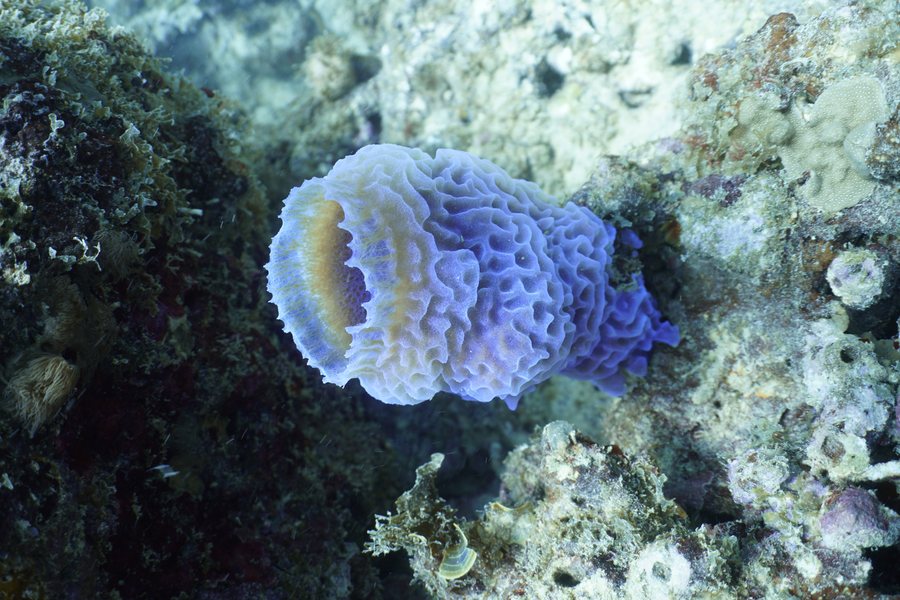
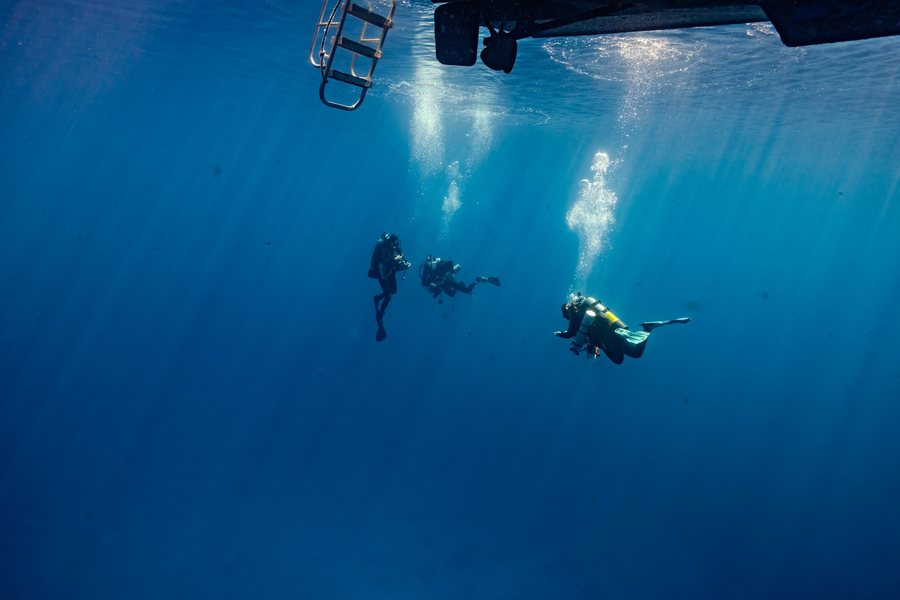
Gallery: select & novel images
The AI models & metrics
Deep in the weeds: each subject type is screened by its own model on the VICAR Compute Core. The reef fish model reflects our February 2026 report; the other figures are illustrative for models in active development. Each model links to its report, weights, and a way to contribute training imagery.
Reef fish
Coral health & disease
Coral species
Sponge
Sea fan / octocoral
Macroalgae
Invasive species
We appreciate your contribution and curiosity.
Please tell us what you think you saw. We will run the matching model.
What did you see?
Pick the closest match and we will run that model.
Upload a photo & outline your target.
Where, and who?
Tag your observation. This is required to see results.